a man sits in a car listening to music

Beyond Speaker Tuning

As automotive audio systems become more advanced, coordinated sound field optimisation is emerging as an alternative to traditional isolated speaker tuning.

The Cabin Is Part of the System

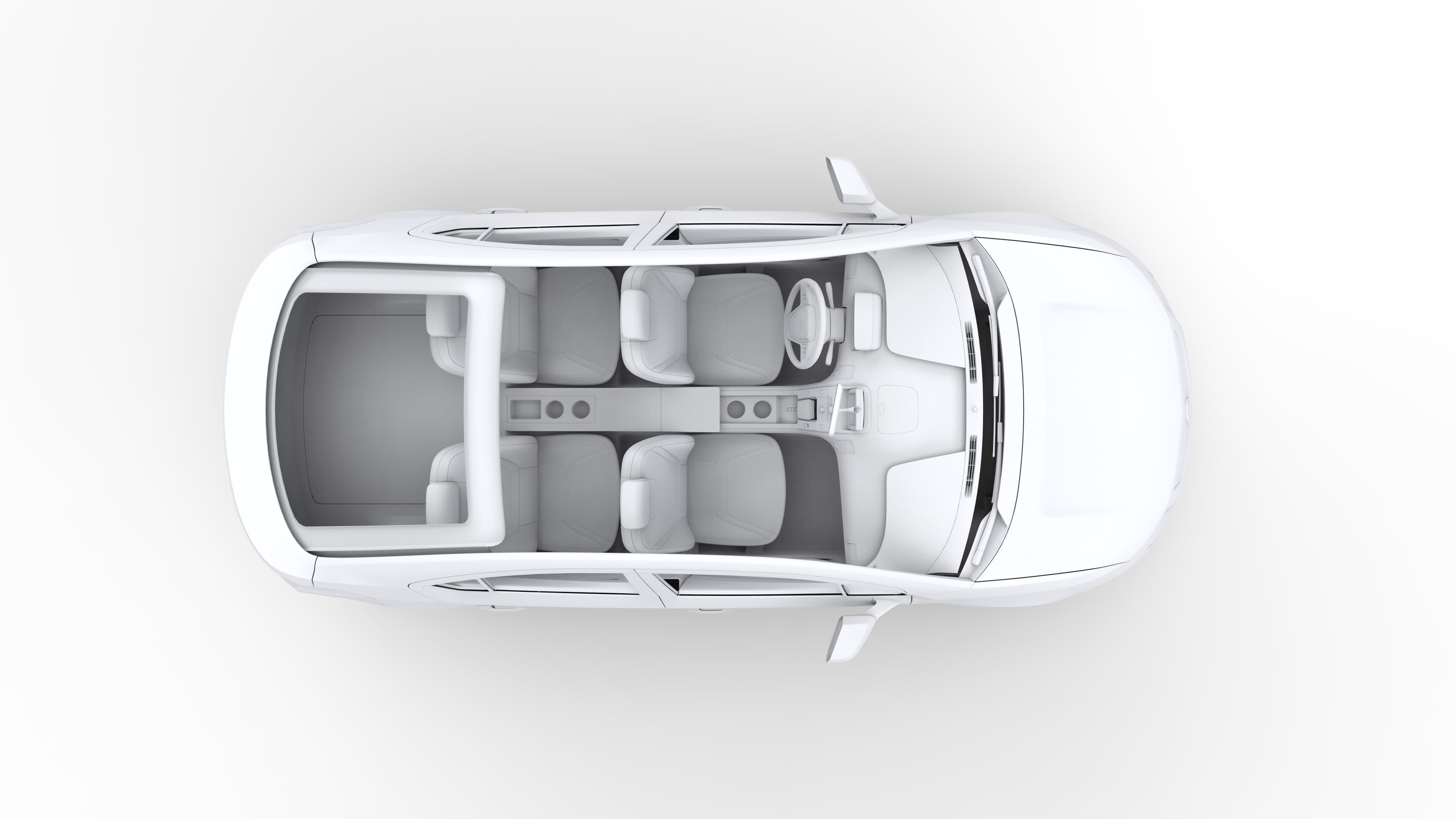
Traditional tuning approaches largely optimise speakers individually. But inside a vehicle cabin, listeners do not hear speakers independently. They hear the combined behaviour of reflections, resonances, wave interactions, and wave propagation throughout the space.

At lower frequencies especially, the cabin itself becomes part of the acoustic system. This creates an important limitation: optimising individual speakers does not necessarily optimise how sound behaves throughout the listening environment.

Coordinated speaker optimisation instead focuses on shaping acoustic behaviour across the cabin itself.

  • Why cabin acoustics become increasingly difficult to manage

    Vehicle cabins create highly complex acoustic environments. Reflections from glass, dashboards, seats, and interior surfaces interact with direct sound from the speakers, while asymmetrical layouts and seating positions create large acoustic differences throughout the cabin.

    At lower frequencies, these challenges become even more significant due to longer wavelengths and stronger interaction with the vehicle interior itself.

  • Why Bass Changes the Problem

    Low frequencies behave fundamentally differently from higher frequencies. Their longer wavelengths interact heavily with cabin dimensions, reflective surfaces, and seating positions, creating resonances and large variations throughout the vehicle.

    Small changes in placement or tuning can therefore produce significant differences in how bass is perceived across listening positions. Traditional SIMO approaches optimise speakers independently across multiple measurement points. While this can improve local performance, it does not fully address how low frequency wave propagation behaves throughout the cabin.

    Coordinated MIMO optimisation instead allows multiple speakers to work together to improve low frequency behaviour across the listening environment itself.

  • SIMO and MIMO

    Traditional SIMO optimisation refines speakers independently across multiple measurement positions. MIMO approaches instead optimise multiple speakers together as a coordinated acoustic system.

    Rather than focusing only on the output of individual speakers, coordinated optimisation focuses on how speakers interact throughout the listening environment to shape wave propagation characteristics across the cabin.

A Shift in Sound Field Control

Early sound field control approaches explored how multiple speakers could recreate a virtual acoustic environment through coordinated optimisation across the entire system.

This later evolved toward a more focused strategy using coordinated optimisation primarily where it is most effective: the low frequency range. At lower frequencies, longer wavelengths allow multiple speakers to work together efficiently even with fewer acoustic sources.

Rather than replacing the cabin with a completely virtual listening environment, the objective became improving the natural wave propagation characteristics of the real cabin itself. This approach later became the foundation for automotive technologies such as Dirac Unison and eventually home audio technologies like Active Room Treatment (ART).

  • Why optimisation shifted toward lower frequencies

    Early full frequency sound field reconstruction approaches required a large number of speakers to accurately recreate a virtual acoustic environment.

    Focusing coordinated optimisation primarily on lower frequencies created a more efficient and practical approach. Longer wavelengths in the bass region allow multiple speakers to work together more effectively, even in real world systems with a limited number of speakers.

    This also targets one of the most difficult aspects of cabin acoustics: low frequency behaviour.

When Speakers Work Together

Traditional bass management largely routes low frequencies toward dedicated subwoofers. Coordinated sound field optimisation expands this concept by allowing speakers to support one another throughout overlapping low frequency ranges.

In coordinated MIMO optimisation, a speaker may function as a primary source in one situation while supporting another speaker elsewhere in the system. The objective is not simply increasing bass output, but improving how low frequency energy propagates throughout the cabin through coordinated speaker behaviour.

This approach can help reduce low frequency resonances, improve bass consistency across seating positions, reduce bass decay, and improve low frequency impulse behaviour.

  • Beyond traditional crossovers

    Traditional bass management relies heavily on separating frequency ranges between subwoofers and full range speakers through fixed crossover points.

    Coordinated sound field optimisation instead allows speakers to overlap and collaborate throughout shared low frequency regions. This shifts the focus from isolated speaker roles toward improving the combined acoustic behaviour of the system itself.

A Different Way to Optimise Sound

Modern automotive audio is beginning to move beyond isolated speaker optimisation toward coordinated sound field control.

Not simply tuning speakers individually, but shaping how sound behaves throughout the cabin itself.