Why rooms overpower even great gear
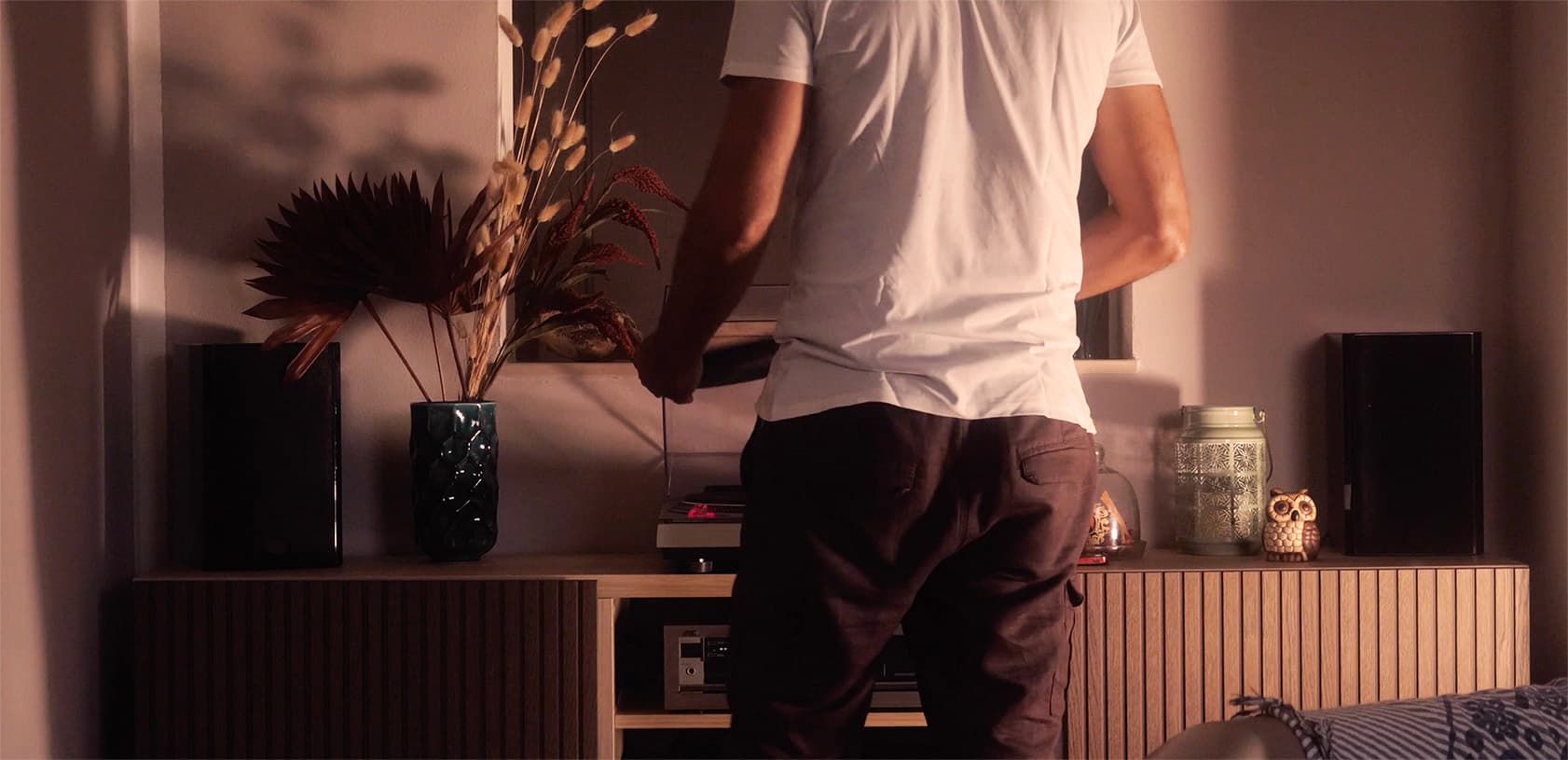
No matter how advanced the components are, the room has more influence on what you hear than any single piece of equipment. Sound reflects off walls, builds up in corners, and cancels itself at the listening position. Some frequencies dominate while others disappear. Bass lingers too long. Transients lose their edge. Even very high-end systems often end up sounding less clear, less controlled, and less precise than they were engineered to be.
What room correction actually changes
Dirac measures how sound behaves in your space and corrects the problems the room introduces. It addresses both tonal balance and timing, reducing resonances, tightening bass, and restoring coherence. As the room’s influence drops, detail comes through, imaging stabilises, and the system’s real character emerges. Room correction does not change your gear. It allows it to perform.
Why Dirac?
Audio brands such as Denon and Marantz integrate Dirac when performance needs to hold up in real environments, not just in ideal ones. Today, Dirac technology runs in millions of systems across home, automotive, and professional audio. Not as an effect, but as a foundational layer that turns uncontrolled spaces into predictable ones and lets engineered performance survive outside the lab.